
Where they make sense
Framed RCC buildings, upper floors, internal partitions, and any site where transport cost per tonne is high. They are non-load-bearing infill — do not substitute them for load-bearing masonry without an engineer's approval.
Fly ash blocks build walls faster than clay brick, weigh less on the structure and use far less mortar. On hill sites where every tonne carried up matters, and on framed buildings where dead load drives the design, they are often the better economic choice.
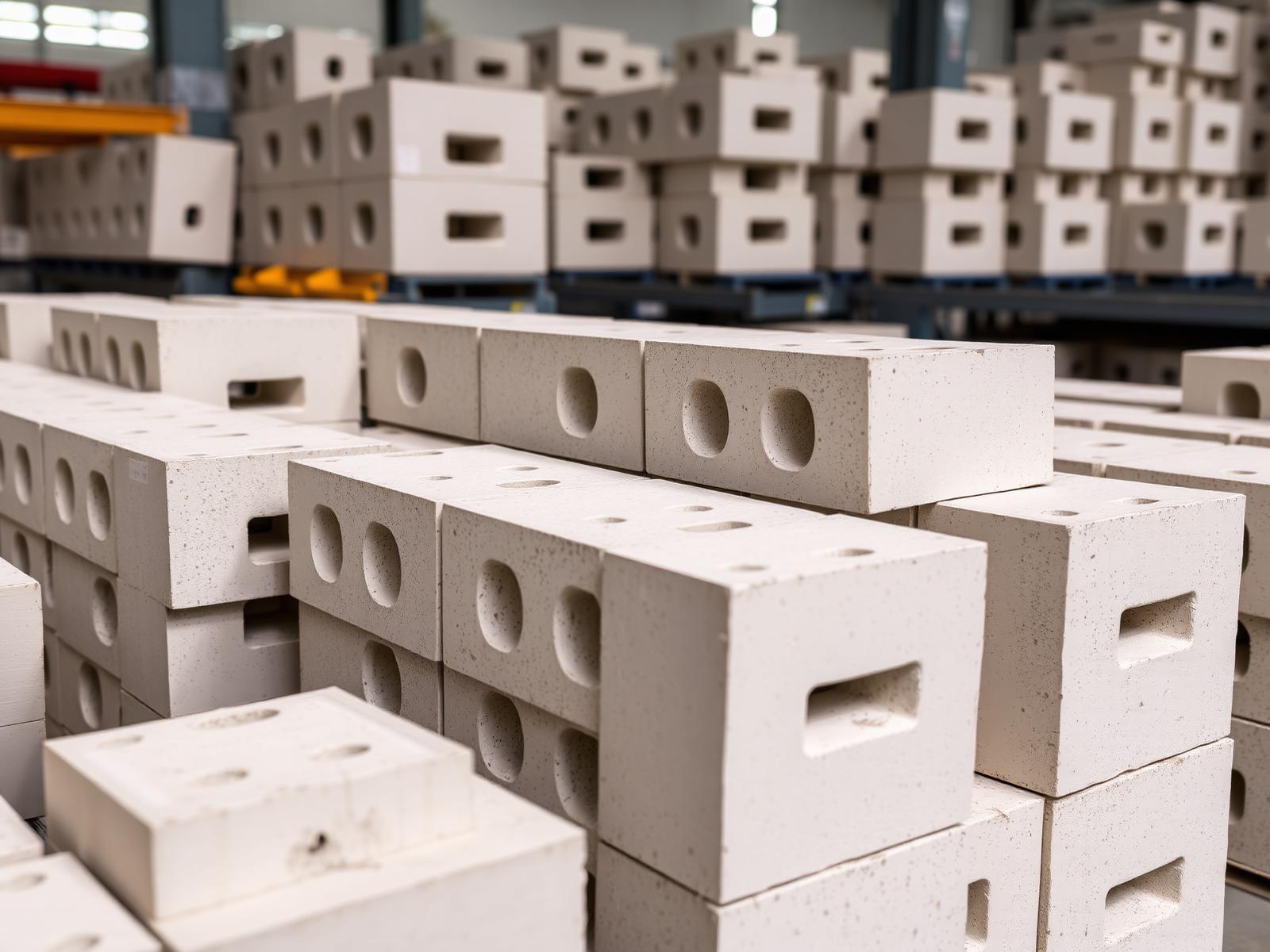
Framed RCC buildings, upper floors, internal partitions, and any site where transport cost per tonne is high. They are non-load-bearing infill — do not substitute them for load-bearing masonry without an engineer's approval.
Use thin-bed block adhesive or a rich mortar, and keep joints thin. Because the faces are true, plaster thickness drops noticeably compared with brickwork, which recovers some of the block cost.
Blocks chip at the corners if tipped off a truck. Unload by hand or on pallets, and stack under cover so they stay dry before laying.
Yes, we supply fly ash blocks in standard sizes for partition and infill walls, delivered across Siliguri and the surrounding belt.
Blocks are lighter, larger and more uniform, so walls go up faster with less mortar and a thinner plaster coat. They also reduce dead load on the structure.
Use a standard cement-sand mortar with thin, even joints. Because block faces are flat and true, thick joints are unnecessary and only add cost.
Builders, contractors and homeowners across Siliguri collect from our yard at Dumping ground, 4310/ New Zila Parisad Road, Don Bosco Colony, Bhaktinagar, Salugara, and we load regularly for sites in Darjeeling, Kalimpong and Sikkim. Tell us where the material has to reach and we will confirm the delivery slot before you place the order.